

Have you ever walked into a room full of strangers and walked out with a few meaningful business conversations? That moment where someone remembers your name and what you do feels powerful. It shows how real business relationships are still built with real people, not just clicks and emails.
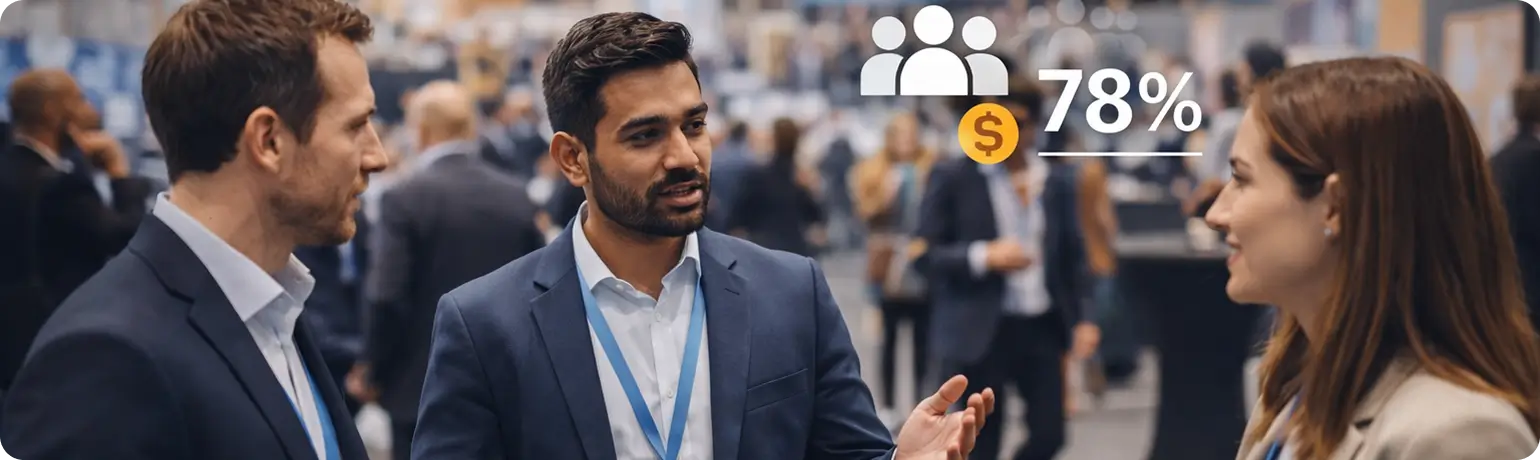
In B2B marketing, events play a huge role in creating these moments. They give decision makers a chance to meet, talk, learn, and trust one another. In‑person events are considered the most impactful channel for building deeper connections, with around 78% sof event organisers believing that live events will be even more critical in the coming years.
In this blog, we’ll explore the types of B2B events that help leaders build strong relationships, why they work, and how you can use them to grow your business in meaningful ways. Let’s dive in.
Business relationships don’t happen by chance. They grow through meaningful conversations, shared learning, and trust built over time. Live and well-planned B2B events create the right environment for these interactions to happen naturally and at scale.
When people meet face to face, they pick up more than spoken words. Tone, intent, and energy shape how ideas are understood and remembered. This depth of engagement strengthens connections far more than emails or digital touchpoints alone. That’s why decision makers often recall event conversations long after they forget ads or online content.
Industry data strongly supports this impact:
Taken together, this makes one thing clear. B2B events aren’t just gatherings on a calendar but have become strategic opportunities. And choosing the right types of B2B events can directly shape how strong, lasting, and profitable your business relationships become.
Not all B2B events serve the same purpose. Some are built for visibility, some for trust, and others for deep, high-value conversations. Understanding the role each event type plays helps decision makers invest time and budget where it truly matters.
Below are the most effective types of B2B events and how they support relationship building at different stages.
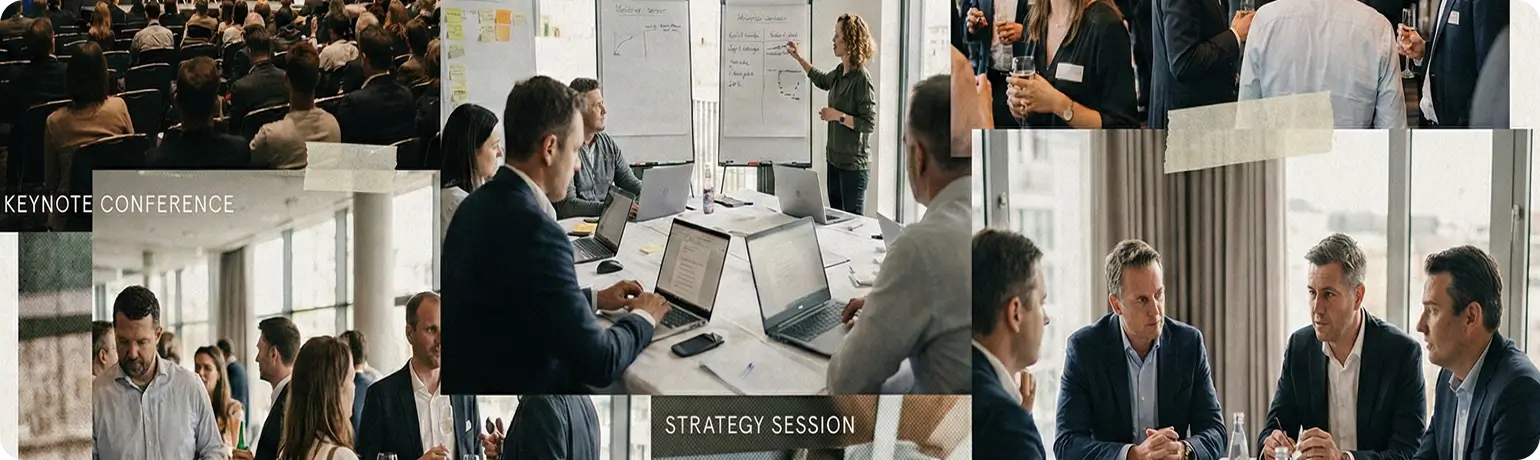
Conferences are large, knowledge-driven gatherings where learning and networking happen side by side. They usually include keynote sessions, panel discussions, breakout rooms, and informal networking spaces.
These events work well for positioning your brand as credible and informed. Since attendees come ready to learn and exchange ideas, conversations feel natural and purposeful. Coffee breaks, post-session chats, and shared learning moments create multiple chances to connect, making follow-ups easier and more meaningful after the event.
Trade shows and expos focus on visibility and discovery. Businesses showcase products, services, and innovations through booths, demos, and live interactions.
What makes these events valuable is intent. Attendees are actively exploring solutions, partnerships, or vendors. This creates focused conversations with people who already have a business need. As a result, discussions tend to move faster from introduction to opportunity, especially with decision makers looking for practical outcomes.
Networking events are built around conversation rather than content. They are often informal and designed to encourage introductions and open discussions.
Because there’s less structure, people feel freer to talk, listen, and explore mutual interests. These events are especially useful for early-stage relationship building. Connections here often start casually and grow over time, based on trust, familiarity, and shared context rather than immediate sales intent.
Workshops and masterclasses are small, interactive, and focused on problem solving or skill development. Participants learn by doing, not just listening.
This format creates deeper engagement because you’re working alongside attendees, not speaking at them. Helping someone think through a challenge builds credibility quickly. Over time, this positions you as a trusted expert, which naturally leads to stronger professional relationships and future collaboration.
Webinars and virtual events make it easier to reach people across locations without travel. They are commonly used for knowledge sharing, thought leadership, and industry updates.
While the setting is digital, relationships can still form when sessions are interactive. Live questions, polls, and discussions help people feel seen and heard. These events are often the first touchpoint, opening the door for follow-up conversations that can later move into deeper engagement.
Hybrid events combine in-person and virtual participation. They offer flexibility while maintaining the benefits of live interaction
This format allows businesses to connect with a wider audience while still creating personal experiences. Hybrid events also generate useful engagement data, which helps personalise follow-ups. They are especially effective when audiences are spread across locations or have different preferences for attending.
VIP dinners and roundtables are invitation-only events with a small, carefully selected group of leaders or decision makers.
The setting encourages honest, focused conversations without distractions. Discussions often go beyond surface topics into real business goals, challenges, and opportunities. Because of the intimacy and trust involved, these events are ideal for building long-term partnerships and strategic relationships.
Roadshows and pop-up events bring your brand directly to different cities or regions. They often combine presentations, demos, and networking in a local setting
These events show commitment to the market and make audiences feel valued. Meeting people in their own environment builds familiarity and trust faster. For businesses expanding into new regions, roadshows help establish relationships that feel personal rather than distant.
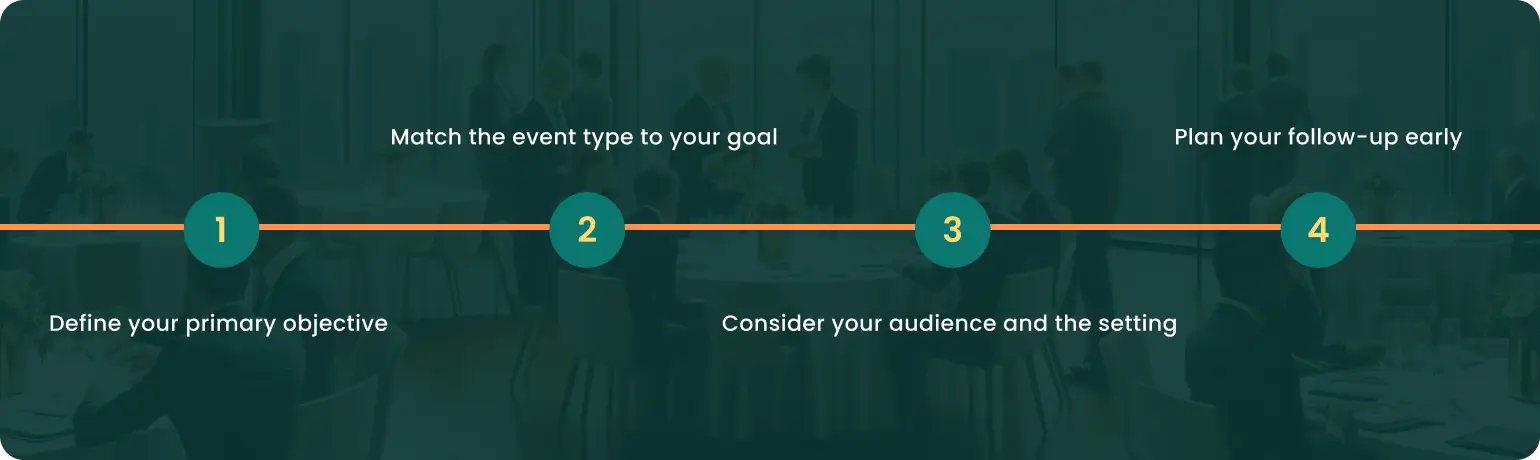
Choosing a B2B event works best when you slow down and take it one step at a time, instead of treating every event as if it serves the same purpose.
Start by being honest about what you want from the event. Are you trying to get your brand in front of more people, educate your audience, generate leads, build trust, or form long-term partnerships? Once the goal is clear, many options naturally fall away.
Not every event supports the same outcome. Conferences and trade shows are useful when visibility matters. Workshops, roundtables, and VIP dinners create space for deeper conversations. Networking events help keep existing relationships active and warm over time.
Think about how your decision makers prefer to engage. Some are comfortable in structured, formal environments. Others open up more in smaller, focused settings. Choosing the right format often leads to better conversations and stronger participation.
The real value of an event usually shows up after it’s over. Decide in advance how you’ll continue the conversation, share something useful, and stay in touch. Consistent follow-ups turn brief meetings into lasting business relationships. When approached this way, B2B events stop feeling like one-time activities. They become intentional tools that help your time, effort, and budget deliver long-term results.
When you invest in strategic events today, you give your people the emotional clarity and confidence they need to move forward together.
Strong business relationships are still built one conversation at a time. The types of B2B events covered in this blog create clear opportunities to connect, learn, and build trust with other decision makers. When chosen well, each event supports meaningful conversations that lead to real professional relationships.
If you need support in planning and executing events that align with your business goals, Xarms Solutions can help. Our team designs practical marketing strategies that use events to strengthen relationships and support steady business growth, not just short-term activity.
It starts with clarity on your goal. Different types of B2B events support visibility, trust, or partnerships, so aligning the event format with what you want to achieve helps ensure your time and budget lead to meaningful business outcomes.
Often, yes. While large events bring reach, smaller types of B2B events allow deeper conversations, shared thinking, and genuine trust-building, which usually leads to stronger relationships and more practical collaboration over time.
The best agency understands your goals, audience, and the right types of B2B events to use. Xarms Solutions stands out by designing event strategies that focus on real conversations, clear follow-ups, and long-term relationship building, not just event execution.